

Urban street art will transform the face of modern cities in 2026 in breathtaking ways. From monumental murals to subtle, barely visible interventions in public spaces, the scene will pulsate with creativity and diversity.
This guide highlights the most important trends and current styles, offering inspiration for anyone who wants to discover or create urban street art. You'll gain a comprehensive overview of developments, innovative techniques, influential artists, inspiring locations, and valuable tips for your own projects.
Immerse yourself, be inspired and become part of tomorrow's urban street art movement.
What is Urban Street Art? Definition, History & Meaning&
Urban street art is a global phenomenon today, its roots lying in the streets of 1970s New York. Back then, young artists began leaving their names on subway cars with spray paint. From initial tags and simple lettering, a complex visual language quickly developed, addressing political messages and social issues. The influence of hip-hop culture and social protest movements amplified this development. Early well-known street artists included pioneers like Taki 183 and Cornbread, whose motivation lay in the pursuit of visibility and self-expression. In the 1980s, urban street art experienced a veritable boom, with the movement rapidly spreading to Europe. Major events such as Upfest: Europe's largest street art festival to this day they demonstrate the diversity and innovative power of this art form.
The origins of urban street art
The terms urban street art, graffiti, and urban art are often used synonymously, but they are distinct. While graffiti is primarily understood as lettering—mostly in the form of tags and elaborate lettering—street art encompasses a broader range of visual language, including stencil art, paste-ups, and installations. Urban art, in turn, serves as an umbrella term for all creative interventions in public spaces. Typical techniques range from spray paint and markers to digital projections and recycled materials. In the art market, urban art and street art play a particularly significant role, as they are easier to collect and exhibit. Collectors appreciate the diversity, while the scene is constantly exploring new materials and forms of expression.
| Expression | focus | Example | Material/Technique |
|---|---|---|---|
| graffiti | Writing, letters | Tagging, Wildstyle | Spray can, marker |
| Street Art | Visual language, motifs | Stencil, Paste-Up | stencil, paper |
| Urban Art | Creative diversity | Murals, installations | Mixed Media, Digital |
Distinction: Urban Art vs. Street Art vs. Graffiti
Urban street art is far more than mere decorative embellishment. It reflects societal moods and current debates. Often, it serves as a platform for political statements, social critique, or cultural identity. Public discourse has shifted: what was once considered vandalism is now widely recognized as an artistic contribution to urban development. Street art influences the image of entire neighborhoods and attracts numerous tourists. Famous examples like Banksy and Shepard Fairey demonstrate how urban street art can spark societal debate. In metropolises like Berlin, London, and Paris, the number of visitors participating in street art tours is steadily increasing.The social impact is measurable: Street art creates dialogue, identification and new perspectives in urban spaces.
The social impact of street art
Urban street art is steadily gaining importance in the art market and pop culture. Original works fetch record prices at auctions, and international artists like Mr. Brainwash and Invader collaborate with well-known brands. Street art elements can be found in fashion collections, music videos, and product designs. Limited editions and NFT artworks open up new marketing avenues that specifically appeal to younger target groups. Statistics show that the number of street art exhibitions and sales has increased significantly in recent years. Urban street art thus remains not only an expression of public space but is also an integral part of the modern art world and pop culture.
Trends 2026: New technologies, topics & Innovations
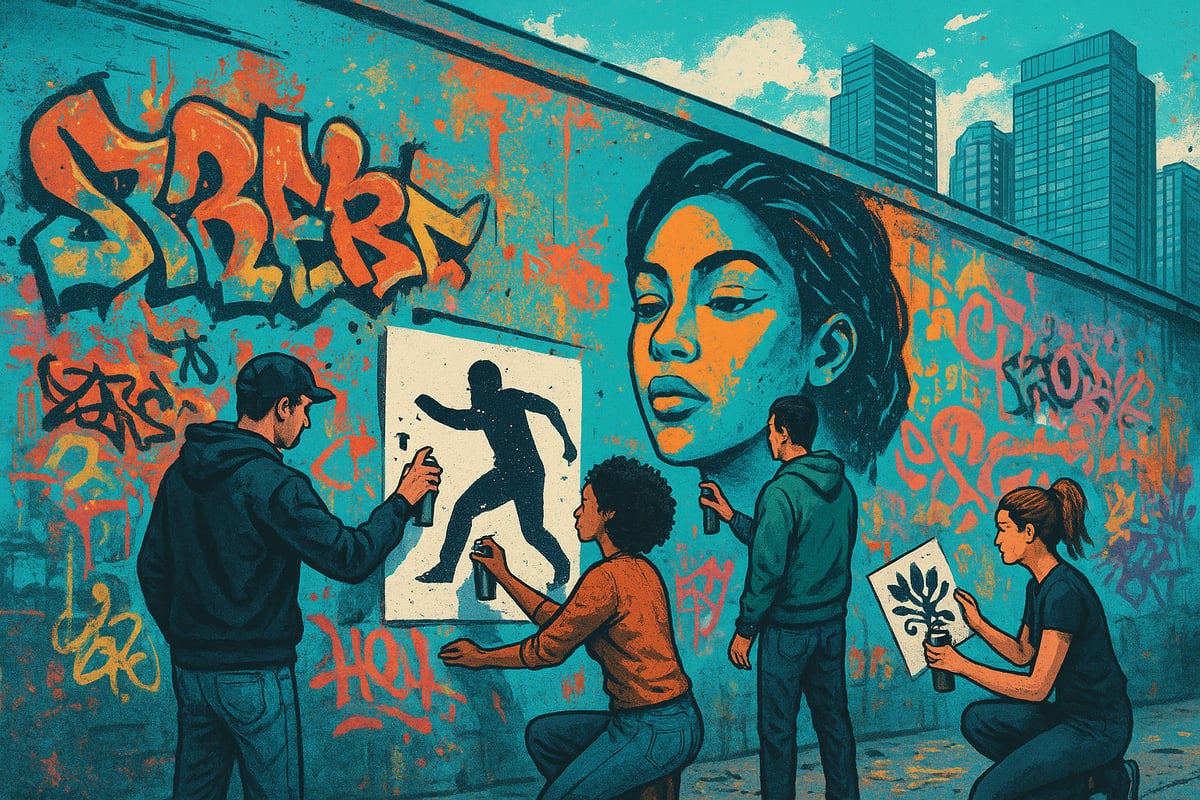
Urban street art will experience a wave of groundbreaking changes in 2026. Artists and collectives will experiment with new technologies, sustainable materials, and socially relevant themes. The scene will continue to grow, remain dynamic, and inspire both professionals and newcomers. The following are the five key trends shaping the future of urban street art.
Digital Street Art & Augmented Reality
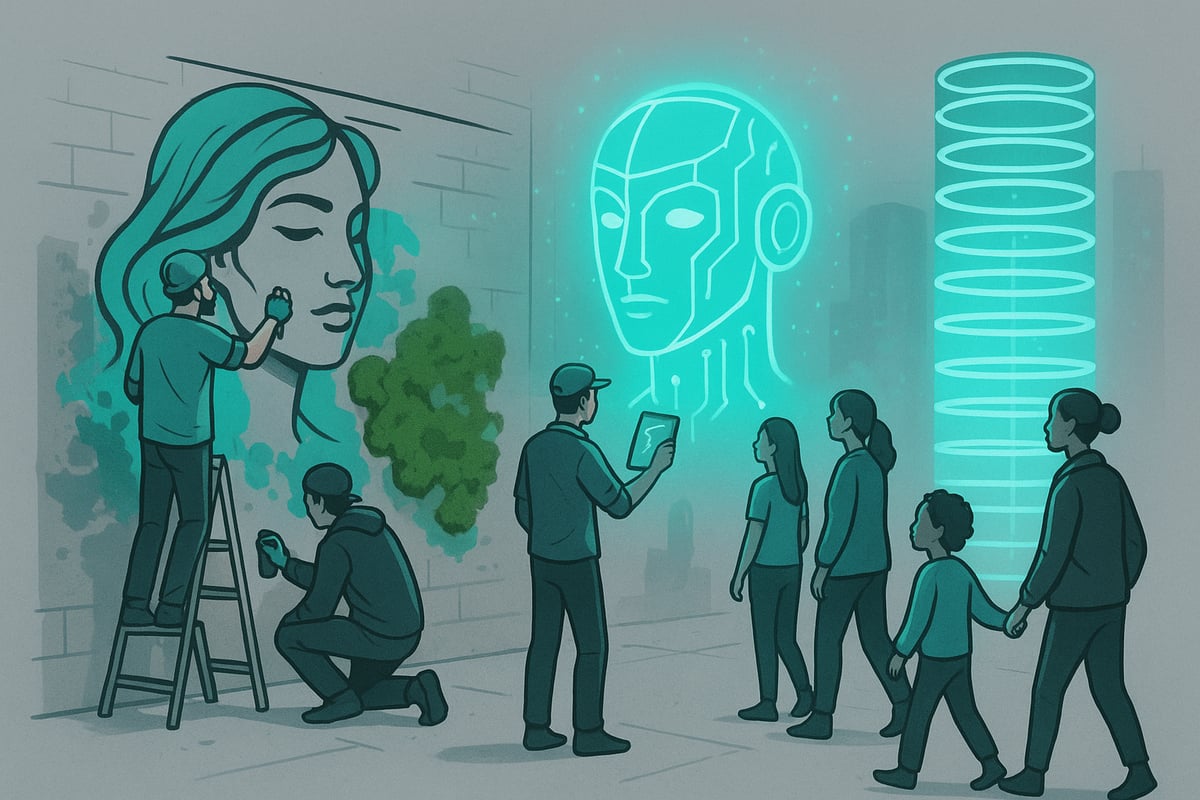
Digital innovations are fundamentally transforming urban street art. More and more artists are using AR apps and projections to make their works interactively accessible in public spaces. With a smartphone, murals can suddenly be animated or enhanced with virtual elements. In cities like Berlin and Paris, virtual street art projects have become an integral part of the cityscape.
In 2025, a 30 percent increase in AR art projects was recorded in European cities. This improves accessibility and makes urban street art available to a wider audience. New research approaches, such as those developed in the GestoBrush: AR for graffiti artists The study examines how artists create digital street art using physical interaction. In this way, technology merges with art in a completely new way.
Sustainability and ecological materials
Sustainability will be a central theme for urban street art in 2026. Many artists will rely on environmentally friendly paints, recycled materials, and innovative techniques such as moss graffiti. Urban gardening will be increasingly integrated into street art concepts, creating green oases in the heart of the city.
Artists' initiatives promote sustainable urban design by implementing biological or biodegradable installations. This development not only makes urban street art more environmentally friendly but also contributes to the climate adaptation of urban spaces. Cities thus benefit from more green spaces and creative, sustainable impulses.
Social issues & activism
In 2026, urban street art will be an important platform for social debates. Artists will address topics such as the environment, diversity, and equality, translating them into impactful murals or temporary protests. Political messages are often a central component of these modern works.
Collaboration with NGOs, local initiatives, and citizen groups is increasing. This has led to the creation of numerous murals in recent years addressing Black Lives Matter, climate change, and women's rights. According to current statistics, around 40 percent of newly created urban street art works have a clear social focus, underscoring its relevance as a medium for activism.
Artificial intelligence & new creative tools
Artificial intelligence opens up entirely new possibilities for urban street art in 2026. More and more artists are experimenting with AI-generated motifs and algorithmically created compositions. Digital tools facilitate the sketching phase, simulations, and the preparation of complex murals.
Some artists use AI for digital collages or large-scale murals that are constantly evolving. This sparks fascinating discussions about authorship and authenticity in urban street art. Forecasts predict that the fusion of technology and art will continue to increase and have a lasting impact on the scene.
Immersive street art experiences & Events
Experience-oriented formats will be a major influence on urban street art in 2026. Large-scale, walk-through installations, light art, and interactive events will attract increasing numbers of visitors. Street art festivals such as the Berlin Mural Fest or Upfest in Bristol will offer live paintings, music, and workshops.
Visitor numbers at urban art events are steadily increasing, which has a positive impact on the local economy and tourism. Immersive experiences make urban street art attractive to a wide range of target groups and foster creative exchange within the community.
Styles and techniques: From graffiti to installations
Urban street art captivates with its diversity of styles and techniques. Each form of expression has its own history, visual language, and impact on the cityscape. Below, we provide an overview of the key approaches shaping the urban art scene in 2026.
Classic graffiti styles
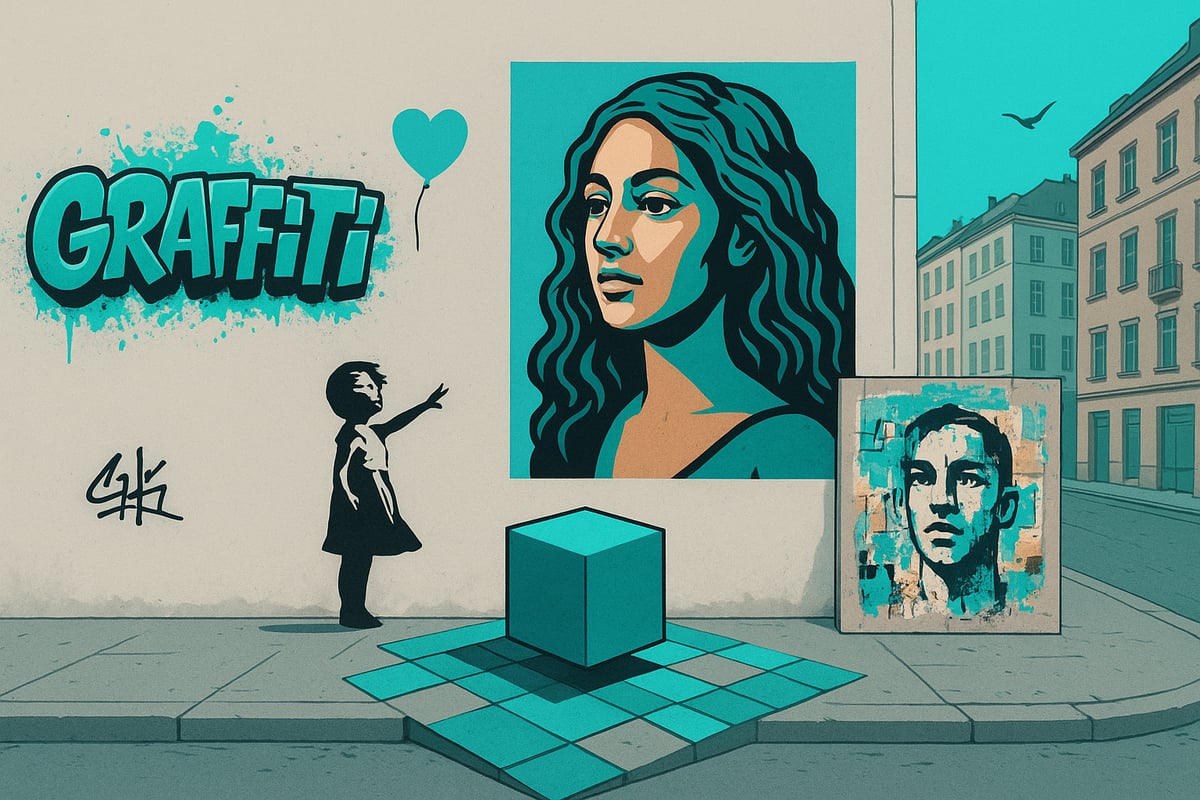
Classic graffiti styles form the foundation of urban street art. Among the best-known are tagging, throw-ups, wildstyle, and blockbusters. These styles are usually colorful and dynamic, often featuring strong contrasts and individual handwriting.
- Tagging: A quick signature, usually used as an artist's trademark.
- Throw-Ups: Larger, more elaborate bubble letters, often two-tone.
- Wildstyle: Complex letter intertwinings and abstract shapes.
- Blockbuster: Large, block-like letters for maximum visibility.
The technical execution requires skill in handling spray cans, caps, and markers. Artists like Akte One, Cren, and YESS have shaped this scene. Urban street art in classic graffiti form continues to influence new styles and contributes to the identity of entire neighborhoods.
Stencil art & Paste-ups
Stencil art, also known as stencil painting, is a defining element of urban street art. It involves quickly applying designs to walls using stencils and spray paint. This technique allows for the multiple reproduction of messages and designs and creates clean, graphic lines.
- Advantages: Speed, repeatability, and precision
- Famous artists: Banksy, Blek le Rat
- Typical motifs: Political statements and social criticism
Paste-ups complement the scene with pasted-on paper works, collages, and posters. Numerous paste-up spots can be found in cities like Hamburg, London, and Paris. These techniques make urban street art accessible to artists with limited time or resources and open up new possibilities for creative expression.
Murals & mural
Murals and large-scale wall paintings are a central element of urban street art. They are often created legally, with permission from homeowners or as part of festivals. The planning process includes sketches, color schemes, and often a message.
Artists like Victor Ash and Mr. Brainwash create murals of impressive size and thematic diversity. The motifs range from portraits and socially critical scenes to abstract compositions. International collectives are transforming entire streets. Urban street art in mural form attracts many visitors and transforms gray facades into vibrant works of art.
3D Street Art & Sculptural installations
Another trend within urban street art is 3D installations and optical illusions. Here, artists use materials such as wood, metal, or recycled objects to create spatial effects. Temporary sculptures and walk-in installations that amaze passersby are particularly popular.
- Spatial illusions: Deceptively realistic 3D images on sidewalks
- Sculpable Street Art: Interactive Elements in Urban Space
- Integration of light, sound and digital effects
Those who want to delve deeper into innovative 3D techniques will find more information at 3D Street Art & Balloon Artwork vivid examples. Urban street art thus becomes an experiential space and promotes interaction between art and the public.
Mixed Media & experimental techniques
The boundaries of urban street art are shifting through mixed media and experimental approaches. Artists are combining classic techniques with digital media, light projections, and augmented reality. These crossover projects bring new dynamism to the genre and encourage collaboration.
| Technology | medium | Example |
|---|---|---|
| spray paint | wall, paper | Urban x Classic |
| Projections | facade, sidewalk | Fashion Chimp |
| Sound & Light | installation | Digital collages |
The combination of analog and digital elements creates hybrid works that constantly redefine urban street art. This openness to innovation makes the genre particularly exciting for the future.
Inspiration: The most influential artists and works of 2026
Urban street art thrives on the creative minds who set trends worldwide, create new forms of expression, and transform entire cityscapes. The scene in 2026 is characterized by a multitude of international icons, emerging talents, and innovative digital developments. Here, we present the key personalities, projects, and digital trends that are currently inspiring urban street art.
International icons of urban street art
Artists such as [name of artist] have shaped the world. Banksy, Shepard Fairey, JR and Invader urban street art is crucial. Her works, such as "Balloon Girl", "Obey Giant" or the "Inside Out Project", are not only socially critical, but have also conquered the art market.
Banksy auctions fetch record sums, while JR's large-scale photo installations attract worldwide attention. Even newer names like... Mr. Paradox Paradise: Vertical graffiti in Berlin They set innovative standards and demonstrate the diversity of urban street art in 2026. Through their presence in museums and media, they inspire a new generation of artists.
Emerging talents and local scenes
Alongside the global stars, the importance of young artists and local scenes for urban street art is growing rapidly.In Germany and Europe, names like Zyko78, Gur Ewen and L.E.T. for a breath of fresh air. Galleries, festivals and social media offer these talents new platforms for presentation.
Regional murals and innovative collages gain recognition through online channels, inspiring others to create their own. The increasing number of workshops and community projects fosters diversity and innovation within urban street art.
Women in the street art scene
The visibility of women and non-binary artists is steadily growing in urban street art. Artists such as Alice Pasquini and Miss Van They set strong priorities by addressing empowerment and social diversity.
Various initiatives and networks specifically promote female talent, which is also reflected in the figures: in 2025, the proportion of female artists at renowned festivals was over 30 percent. Their works make urban street art even more multifaceted and inspire new target groups.
Street art and social spaces: Successful projects
Urban street art not only creates art, but also social spaces. Community murals, participatory projects, and collaborations with schools or neighborhoods strengthen dialogue in the city.
Successful examples include large-scale murals created in collaboration with children or local residents. Such projects foster a sense of belonging to the neighborhood and have a lasting impact on urban development. Participation, communication, and long-term planning are crucial success factors for urban street art as a social tool.
Street art goes digital: NFT art and online galleries
Digitization is opening up entirely new avenues for urban street art. Digital artworks, such as NFTs (New Film Formats), are gaining in importance as they open up new markets for artists. Platforms like OpenSea and Super Rare They offer street artists the opportunity to present and sell their works globally.
NFT collections and online galleries facilitate access for collectors and fans. The discussion surrounding originality and collector value shapes the scene and will continue to gain momentum in 2026. The combination of urban street art and digital technologies makes the genre future-proof and even more accessible.
Hotspots & Discover Street Art: The best cities and tours for 2026
Urban street art shapes the face of many cities and offers fascinating opportunities for discovery and active participation in 2026. Whether in trendy metropolises, on guided tours, or digitally via app, urban street art is more diverse and accessible than ever before.
European metropolises as street art centers
Berlin, Hamburg, London, Paris and Barcelona are considered hotspots for urban street art in 2026. These cities will see the creation of new murals, open-air galleries and innovative street art museums that attract thousands of visitors annually.
Major festivals like the Berlin Mural Fest or London's Shoreditch Walks offer insights into current trends and provide opportunities for direct contact with artists. Guided tours are ideal for self-discovery, as are individual walks through trendy neighborhoods like Kreuzberg, St. Pauli, or Belleville in Paris.
- Popular street art districts: Kreuzberg (Berlin), Shoreditch (London), El Raval (Barcelona)
- Open-air galleries and museums as a source of inspiration
- Tip: Book early, many tours fill up quickly.
Urban street art gives these cities a creative face and promotes intercultural exchange.
Street art in German cities
Urban street art has also experienced a dynamic development in Germany. Hamburg captivates with districts like St. Pauli, Schanze, and Altona, where large-scale murals and temporary installations shape the streetscape. In Berlin, hotspots such as Friedrichshain, the Urban Spree Gallery, and numerous legal wall spaces for artists can be found.
Munich, Cologne, and Leipzig offer a growing scene with local collectives and evolving projects. Victor Ash's work "Wings" in Berlin, in particular, has become a landmark. The number of urban street art tours and workshops has increased significantly in recent years.
- Popular tours in Hamburg and Berlin
- Local artist collectives and temporary projects
- Increasing demand for workshops and guided tours
In this way, urban street art becomes a connecting element between art, city and society.
Guided Street Art Tours & Workshops
The best way to experience urban street art is through guided tours and workshops. These formats offer exclusive insights, background information, and the opportunity to connect with artists. Whether on foot, by bike, or virtually – there's something to suit every taste.
One example is the Street Art Tours & Workshops in BerlinThese programs combine insider knowledge, access to hidden works, and creative participatory formats. Bookings for such programs increased by 25 percent in 2025.
- Exclusive tours with artist accompaniment
- Various formats: Walking, Cycling, Virtual
- Recommendations: Early booking, group formats for companies and events
Guided experiences make urban street art authentic and interactive.
Creative street art workshops for teams and events
Creative street art workshops offer unique experiences for companies, brands, and groups. Providers like Brain2Canvas offer graffiti and urban street art workshops throughout Europe – indoors and outdoors, flexibly at numerous locations. Formats range from team-building activities and large-scale events to individual sessions.
All materials are provided, professional artists guide the groups, and no prior knowledge is required. The results are visible, interactive artworks and lasting brand experiences. Customer satisfaction is rated 4.6 out of 5 stars, and numerous references and scalable concepts underscore the quality.
- Workshops for teams, events, brands
- Indoor performance & outdoor throughout Europe
- Sustainable, creative experiences for all participants:
Urban street art thus becomes a unifying element for groups and companies.
Discover street art digitally: apps & virtual galleries
With digital tools and apps, urban street art can now be experienced worldwide. Mobile applications like the Discover the Street Art Tour App They allow users to locate artworks, access background information, and take virtual tours through famous street art districts.
Platforms like Google Arts & Virtual galleries offer cultural experiences, and rising user numbers show that digital platforms are increasingly inspiring people with urban street art. The advantages lie in accessibility, inspiration, and the ability to discover global trends directly via smartphone.
- Navigation to factories via app
- Virtual tours and galleries worldwide
- Inspiration and knowledge exchange for all street art fans
In this way, urban street art also becomes a digital experience with global reach.
Create your own urban street art: tips, tools & Legal Notice
With urban street art, you can actively shape your city and add creative touches to public spaces. Whether temporary paste-ups, colorful murals, or digital experiments – the possibilities are endless. Here you'll find practical tips, inspiration, and legal information to help you get started in the world of urban street art.
Getting started: Planning your own street art projects
Getting started with urban street art begins with proper planning. First, consider which format suits your style: Do you want to create a small paste-up or a larger mural? Choose suitable materials, such as spray cans, markers, or paper for collages.
Start with a sketch of your idea. Test different techniques on paper before transferring them to the wall. Pay attention to safety aspects, such as wearing masks and gloves, and use environmentally friendly paints whenever possible. This will lay the foundation for your urban street art project.
Inspiration and motivation development
Developing a design is a creative process that makes urban street art unique. Draw inspiration from current trends, local artists, or international festivals. Create a mood board with photos, sketches, and color palettes.
Use digital tools to simulate designs or create collages. Themes like sustainability, diversity, or urban nature offer exciting approaches. Experiment with different styles and combine classic and new techniques to find your own urban street art expression.
Legal framework & Permits
Anyone wanting to create urban street art legally should be aware of the legal framework. For public spaces, permission from the city administration or the property owner is almost always required. Find out about local regulations and available walls where creating art is explicitly permitted well in advance.
Illegal actions can lead to fines or criminal prosecution. Therefore, focus on sustainable projects and secure the necessary permits. This protects you and contributes to the appreciation of urban street art.
Community projects and collaborations
Collaborative projects are an important part of the urban street art scene. Joint projects increase visibility and foster new ideas. Organize workshops, group murals, or events with local associations, schools, or neighborhoods.
Collaborations enable a diverse exchange of techniques and ideas. Successful initiatives are characterized by good communication, clear planning, and sustainable financing. This is how urban street art is created, strengthening identification and cohesion within the neighborhood.
Tools & Resources for street artists:
There are a multitude of useful tools and resources available for urban street art. Among the most important are spray cans, markers, stencils, and digital programs for design and simulation. Online platforms offer opportunities for exchange, presentations, and access to tutorials.
Popular apps help you find legal spaces or connect with other artists. YouTube channels and podcasts offer practical tips. For purchasing materials, it's recommended to visit specialized shops that offer sustainable products. This way, you'll be perfectly equipped for your urban street art journey.
You've now learned how diverse and inspiring Urban Street Art is in 2026 – from innovative techniques and social issues to interactive events. Perhaps you and your team would like to get creative and create an unforgettable experience together? At Brain2Canvas, we'll guide you from the initial idea to the finished artwork – whether indoors, outdoors, for small groups or large events. Discover what's possible with professional guidance and creative freedom, and be inspired by real-world projects.
View our latest creative team events